An Experimental Analysis of Combustor Flow Structure Evolution

Dr. Bassam Abdelnabi
Principal Consultant, Gas Turbine Combustion Expert
 (opens the full-size image in a new tab)
1. Introduction: The Aerodynamics of Combustion
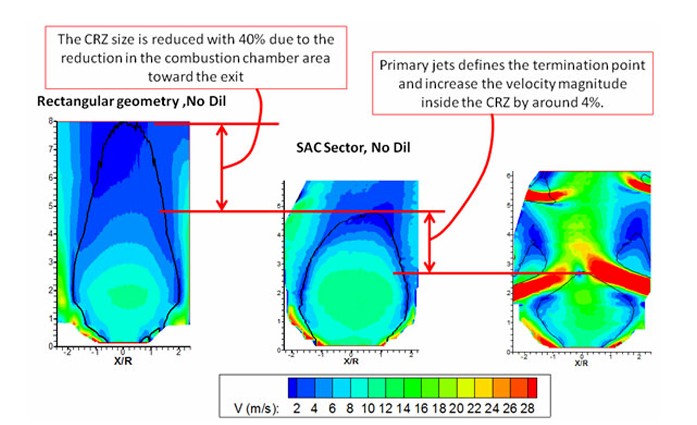
In the design of Gas Turbine Combustors (GTC), aerodynamics, and specifically the structure of the internal flow field, plays a critical role in ensuring flame stability and managing pollutant emissions. The primary mechanism for flame anchoring is the establishment of a Central Recirculation Zone (CRZ), a region of reverse flow that continuously ignites the incoming fuel-air mixture.
This study presents an experimental investigation into how modifications to the combustion chamber geometry can be used to control the flow field structure. The analysis of the resulting aerodynamic changes was conducted using two-component Laser Doppler Velocimetry (LDV).
Want this expertise on your problem?
The same rigor behind these analyses goes into every client engagement, from combustion test campaigns to hydrogen readiness studies.